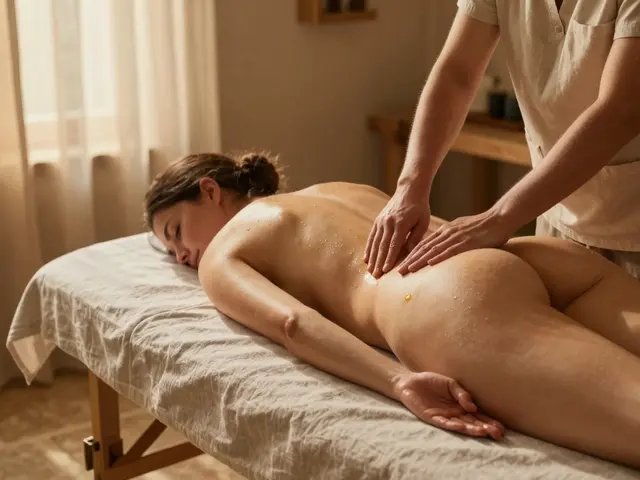
Breathing Techniques Used in Tantric Massage
When you think of tantric massage, you might picture slow hands, candlelight, or deep relaxation. But the real magic? It starts with your breath. Without the right breathing, tantric massage becomes just a gentle touch. With it, it becomes a full-body experience that connects mind, body, and energy in ways most people never feel in daily life.
Why Breathing Matters in Tantric Massage
Tantric massage isn’t about sex. It’s about presence. It’s about feeling every nerve ending, every shift in tension, every ripple of sensation. And that’s impossible if your breath is shallow or rushed. Most people breathe in their chest-short, quick, and disconnected from their belly. That’s the kind of breathing you do when you’re stressed, stuck in traffic, or scrolling through your phone. In tantric massage, you need to switch to belly breathing-deep, slow, and full.
Studies on breathwork in somatic therapies show that diaphragmatic breathing lowers cortisol by up to 30% within 10 minutes. That’s not just relaxation. That’s a neurological reset. In tantric massage, this reset lets the body open up without resistance. The recipient stops thinking about whether they’re doing it right and starts feeling what’s happening. That’s when the real connection begins.
The Three Core Breathing Techniques
There are three breathing patterns used consistently in tantric massage sessions. Each serves a different purpose, and they’re often layered together.
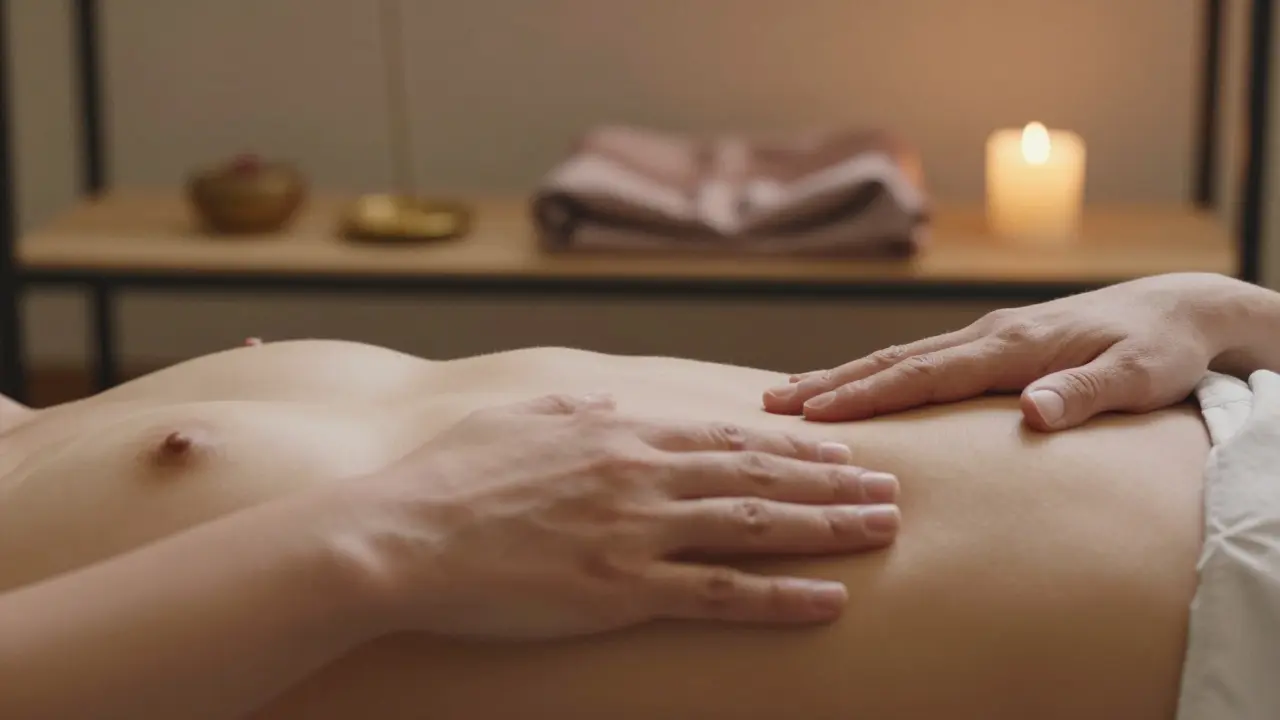
- Diaphragmatic Breathing - This is the foundation. Place one hand on your belly, the other on your chest. Breathe in through your nose so your belly rises like a balloon. Your chest should barely move. Exhale slowly through your mouth, letting the belly fall naturally. Do this for 3-5 minutes before the massage begins. It signals to the nervous system: you’re safe. You can let go.
- Coherent Breathing - This is about rhythm. Inhale for 5 seconds, hold for 1 second, exhale for 5 seconds, hold for 1 second. Repeat. This pattern balances the autonomic nervous system, calming the fight-or-flight response while keeping awareness sharp. It’s perfect during longer strokes or when the therapist is working on sensitive areas like the sacrum or inner thighs.
- Energy Breathing (Wavelike) - This one’s more advanced. As you inhale, imagine the breath moving up from your perineum, through your spine, to the crown of your head. As you exhale, it flows down the front of your body, back to the base. It’s not literal air moving-it’s mental focus. This technique helps channel sensation, making touch feel more intense and more expansive. Many people report feeling warmth, tingling, or even electric pulses during this phase.
How the Practitioner Guides the Breath
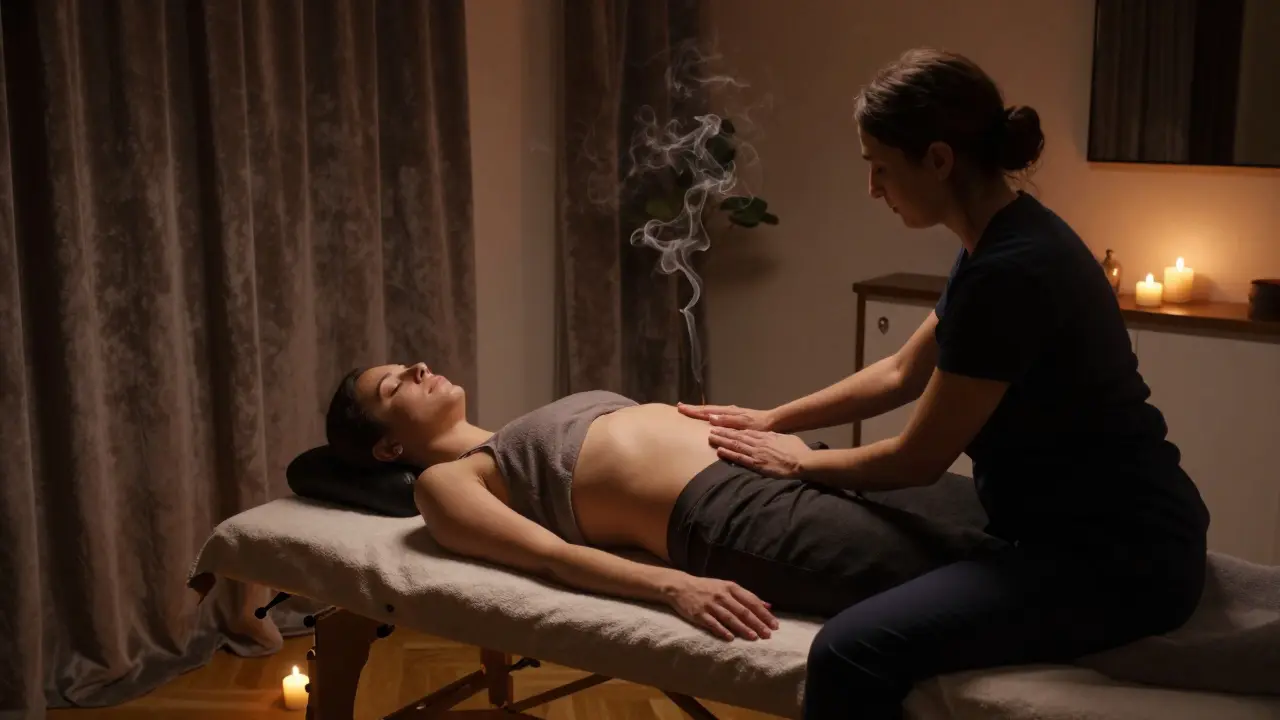
A good tantric massage therapist doesn’t just touch. They lead. They match your breath. They slow down when you’re rushing. They pause when you hold your breath. They might whisper, “Let your exhale out longer,” or simply rest their hand on your lower belly and breathe with you. This mirroring builds trust. It tells your body, “You’re not alone.”
Some therapists use rhythmic tapping on the diaphragm or gentle pressure on the ribs to cue deeper breaths. Others use sound-soft humming during exhales, or even silence, letting the breath become the only rhythm in the room. In Paris, where many sessions take place in quiet apartments with heavy curtains and incense, the absence of music makes breathing even more central. You start to hear your own breath like a song.

Common Mistakes and How to Fix Them
Even experienced people mess up breathing during tantric massage. Here’s what goes wrong-and how to correct it.
- Breathing too fast - If you’re gasping or sighing constantly, you’re still in stress mode. Slow down. Count your inhales and exhales. Aim for 6 breaths per minute.
- Holding your breath during touch - When someone touches your genitals or inner thighs, it’s common to freeze. Your body thinks it’s a threat. The fix? Exhale long and loud when the touch begins. Let the sound out. It breaks the tension cycle.
- Over-focusing on technique - Trying too hard to “do it right” kills the experience. Breathwork in tantric massage isn’t a performance. It’s a surrender. If you catch yourself thinking, “Am I doing this right?”-just breathe. No rules. Just flow.
What Happens When You Breathe Right
People who practice these techniques regularly report things they didn’t expect: emotional release during a shoulder massage, waves of pleasure without orgasm, a sense of deep connection with their partner-even if they didn’t have sex. One woman in Lyon told me she cried for 20 minutes during a session, not because something hurt, but because she hadn’t felt so deeply seen in years.
The science backs this up. Breathwork activates the vagus nerve, which runs from your brainstem to your abdomen. Stimulating it reduces inflammation, improves digestion, and increases feelings of safety and bonding. That’s why tantric massage often leaves people feeling calm, not aroused. It’s not about stimulation-it’s about integration.
After a session, many people say they feel lighter. Not just physically. Mentally. Emotionally. Like a weight they didn’t know they were carrying has been set down.
How to Practice on Your Own
You don’t need a therapist to start. Try this simple routine at home:
- Set aside 10 minutes. No phone. No distractions.
- Lie on your back. Place a pillow under your knees if it helps your lower back relax.
- Place one hand on your belly, one on your chest.
- Breathe in through your nose for 4 seconds. Let your belly rise.
- Hold for 1 second.
- Exhale through your mouth for 6 seconds. Let your belly fall.
- Repeat for 5 minutes.
- Then, switch to coherent breathing: inhale 5, hold 1, exhale 5, hold 1. Repeat for 3 minutes.
- Finish with energy breathing: imagine the breath rising and falling like a wave. Do this for 2 minutes.
Do this daily for a week. Then, try it while someone touches your back or feet. Notice the difference.
When to Seek Professional Guidance
If you’ve had trauma-physical, sexual, or emotional-breathwork can bring up intense emotions. That’s normal. But it’s not always safe to explore alone. If you feel overwhelmed, dizzy, or emotionally flooded during these practices, stop. Find a certified tantric practitioner who also has training in trauma-informed care. In Paris, several therapists combine tantric massage with somatic experiencing. They know how to hold space without pushing.
Don’t rush. Tantric breathing isn’t a tool to get somewhere faster. It’s a way to be where you already are.
Can tantric breathing help with anxiety?
Yes. Tantric breathing, especially coherent and diaphragmatic patterns, directly calms the nervous system. By slowing your breath to 5-6 cycles per minute, you activate the parasympathetic response, which lowers heart rate and reduces cortisol. Many people with chronic anxiety report feeling grounded and less reactive after just a few sessions.
Do I need a partner to practice tantric breathing?
No. Tantric breathing is a personal practice first. Many people start alone to learn how their body responds. Partner work comes later, once you’re comfortable with your own rhythm. In fact, practicing alone builds the awareness you need to connect deeply with someone else.
Is tantric massage the same as erotic massage?
No. Tantric massage focuses on energy, presence, and sensation-not sexual release. While it may involve touching intimate areas, the goal isn’t orgasm. Many people experience pleasure without climax, and some never reach orgasm at all. Erotic massage is goal-oriented. Tantric massage is about being.
How long does it take to feel the effects of tantric breathing?
You can feel a shift in as little as 3 minutes. Most people notice deeper relaxation, slower thoughts, and a sense of warmth in the body after 10-15 minutes of consistent practice. For lasting changes-like reduced anxiety or better emotional regulation-it takes daily practice for 2-4 weeks.
Can I combine tantric breathing with meditation?
Absolutely. In fact, many tantric traditions treat breath as the bridge between meditation and physical sensation. Try sitting quietly and focusing only on the rise and fall of your belly. When your mind wanders, gently return to the breath. This is meditation in motion. Over time, you’ll notice your body responds more deeply to touch, stillness, and silence.